Digital Asset Treasury Implementation for ACCESS
CASE STUDY — STRATEGIC GOVERNANCE
A board-governed Bitcoin and Ethereum treasury, built to institutional standards
In a milestone for institutional digital asset adoption in Asia-Pacific, ACCESS established a strategic BTC and ETH treasury reserve on its balance sheet — supported by a board-approved investment policy framework and independent institutional custody, designed and executed with Katashe Solutions.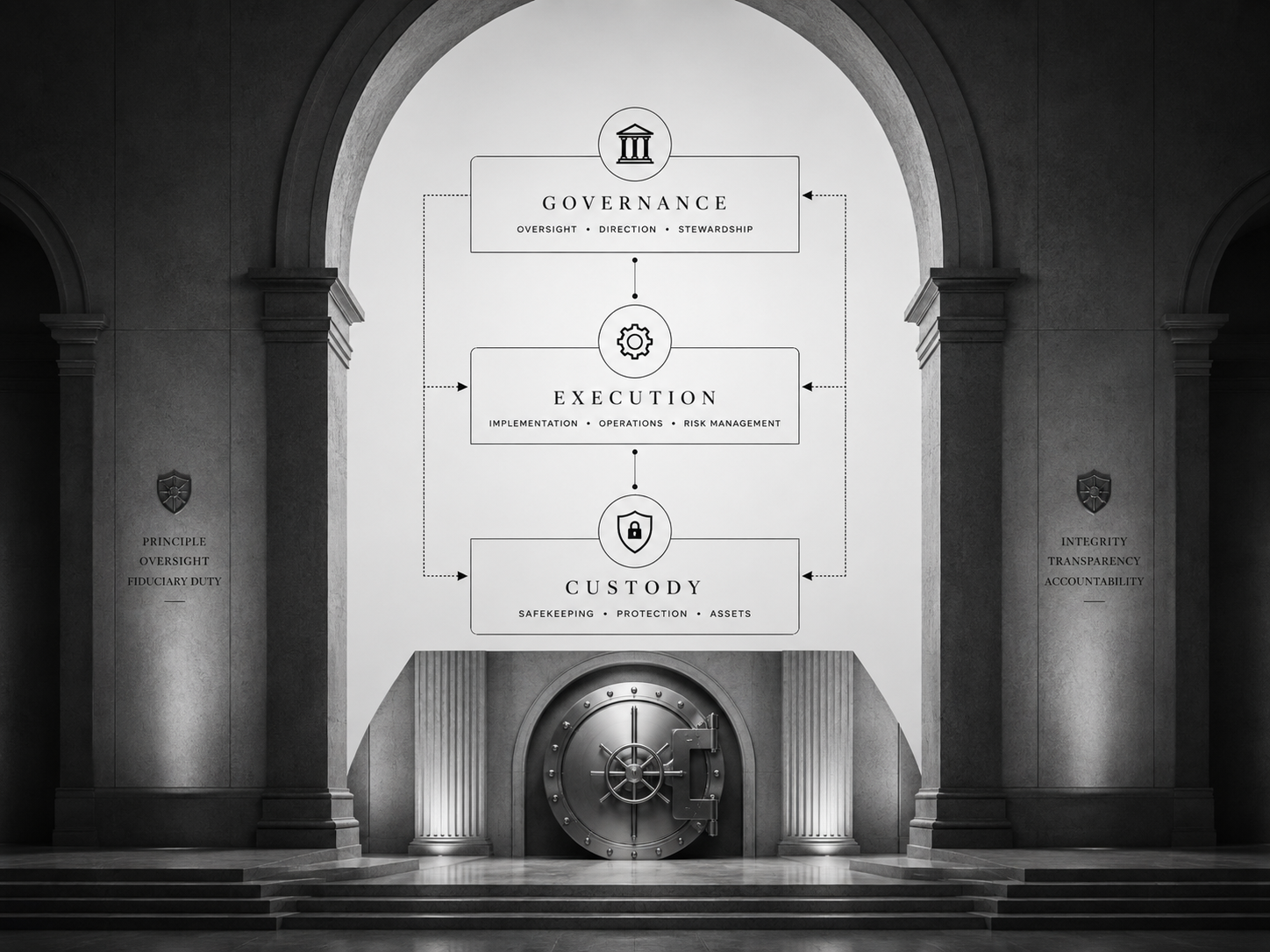
The Client
The Association of Cryptocurrency Enterprises and Start-ups Singapore (ACCESS) is Singapore's cryptocurrency and blockchain industry association — a non-profit institution operating under heightened regulatory and stakeholder expectations.
The Situation
Digital assets were shifting from experimental allocations to formally governed holdings. ACCESS resolved to establish a strategic Bitcoin and Ethereum treasury reserve on its balance sheet — treating governance, oversight and risk discipline as core requirements of adoption, not afterthoughts.
The Challenge
There was no established playbook for a non-profit association holding blockchain-native assets. The structure had to align with fiduciary expectations, audit readiness and board-level oversight — and meet post-FTX expectations for transparency, control integrity and verifiable asset security. Treasury practices from the digital asset world had to be translated into a governance-first operating model suitable for a non-profit institutional environment.
What Katashe Did
Our contribution focused on three core workstreams:
Institutional treasury governance design
We developed and structured the Investment Policy Statement (IPS), approved by the ACCESS Board of Directors. The IPS defines asset allocation parameters, risk limits, counterparty due diligence standards, liquidity considerations and reporting requirements — a formal governance framework for BTC and ETH holdings.
Independent custody and risk architecture
We designed a custody and control structure anchored in independent, institutional-grade custody, selected through a competitive RFP process. The structure introduces clear segregation between governance, execution and asset safeguarding functions, strengthening operational resilience and third-party risk management.
Ecosystem working group coordination
We founded and steered the Crypto Treasury Asset Working Group, convening legal, insurance, custody and digital asset infrastructure participants — including BitGo and Lido — under board oversight and in coordination with ACCESS subcommittees.
The Results
The resulting framework establishes a structured model for digital asset treasury management within a non-profit institutional context. Rather than treating BTC and ETH as experimental allocations, the structure embeds them within formal governance and control systems consistent with institutional treasury standards — contributing to an emerging APAC precedent for non-profit organisations adopting digital asset reserves under formal governance.
Related case studies
ACCESS × Grab Stablecoin Payments · Triple-A UX Audit · Copewell.ai Venture Building